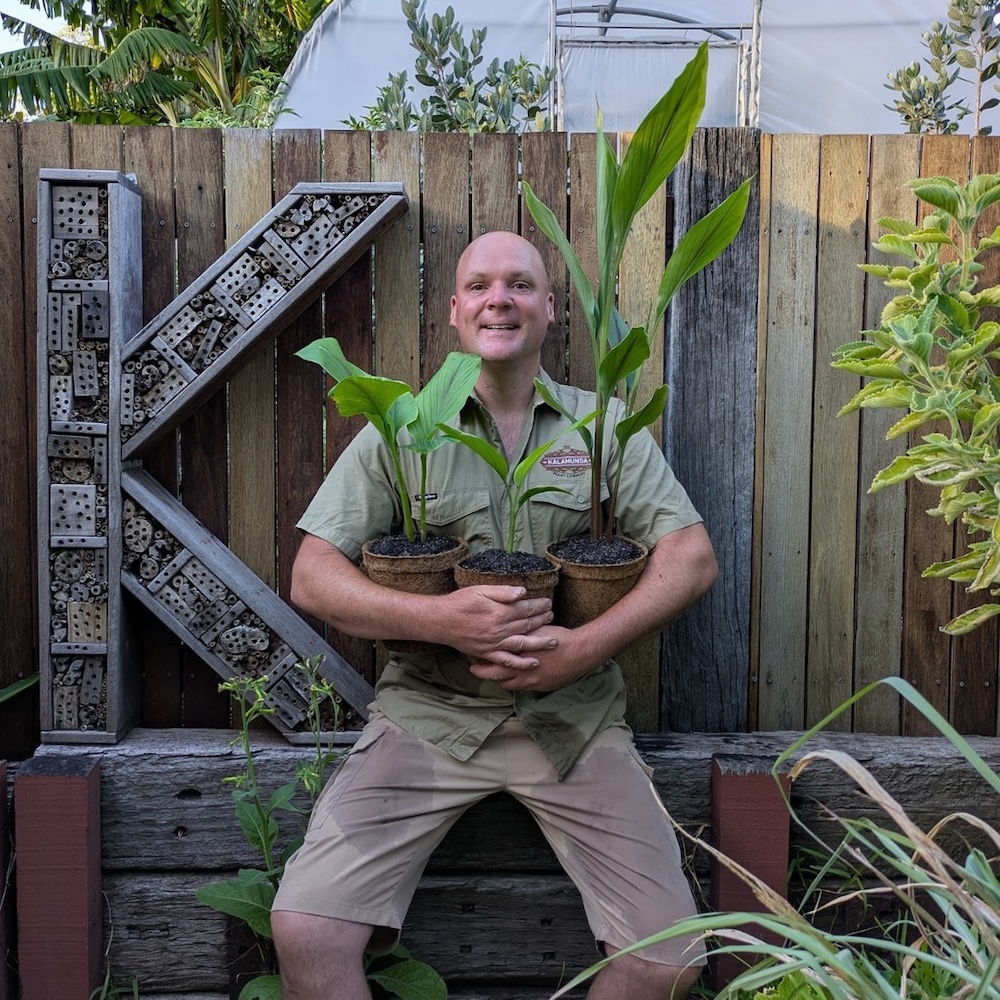
Description
All three…
Black Turmeric – Curcuma caesia
Native to north – east India, this often hard to find perennial is valued more for its medicinal properties rather than its culinary uses.
Traditionally used for blood sugar regulation, digestive issues and respiratory support.
Powerful anti-inflammatory, antimicrobial, antioxidant and analgesic properties, among others (please do your own research).
Lush tropical foliage and pink – white flowers.
The rhizome is blue – black in colour when cut.
The plant enjoys a part shade position in moist soil, and should grow about 1m high by 1m wide.
Ideal for pots.
Native Turmeric – Curcuma australasica
Native to northern Australia.
The rhizomes of this perennial plant can be used as a substitute for Asian turmeric.
Fruit is also produced, but it is not edible.
The plant enjoys a part shade position in rich, well draining soil, and should grow about 1m high by 1m wide.
Ideal for pots.
Turmeric – Curcuma longa
Native to India and parts of South Asia, this perennial plant grows to about 1m in height and is traditionally known for its rhizomes which are used to produce the powdered turmeric spice.
Turmeric is a tropical plant so keep it warm and water it well. The plant enjoys well drained, fertile soil in a part shade position.
Chinese and Ayurvedic medicine has used turmeric as an anti-inflammatory and to treat skin diseases, wounds and liver and digestive problems. Turmeric also contains many anti-inflammatory properties and powerful antioxidants.